Your Muslim students are trying to tell you something. Most schools can’t hear it.
Every day, well-meaning teachers make small, invisible missteps with their Muslim and Somali students — and those missteps quietly cost trust, participation, achievement, and the confidence of families. EMSIPS is the seminar that closes that gap: the beliefs, the daily realities, and the concrete classroom moves your staff can use the very next morning.
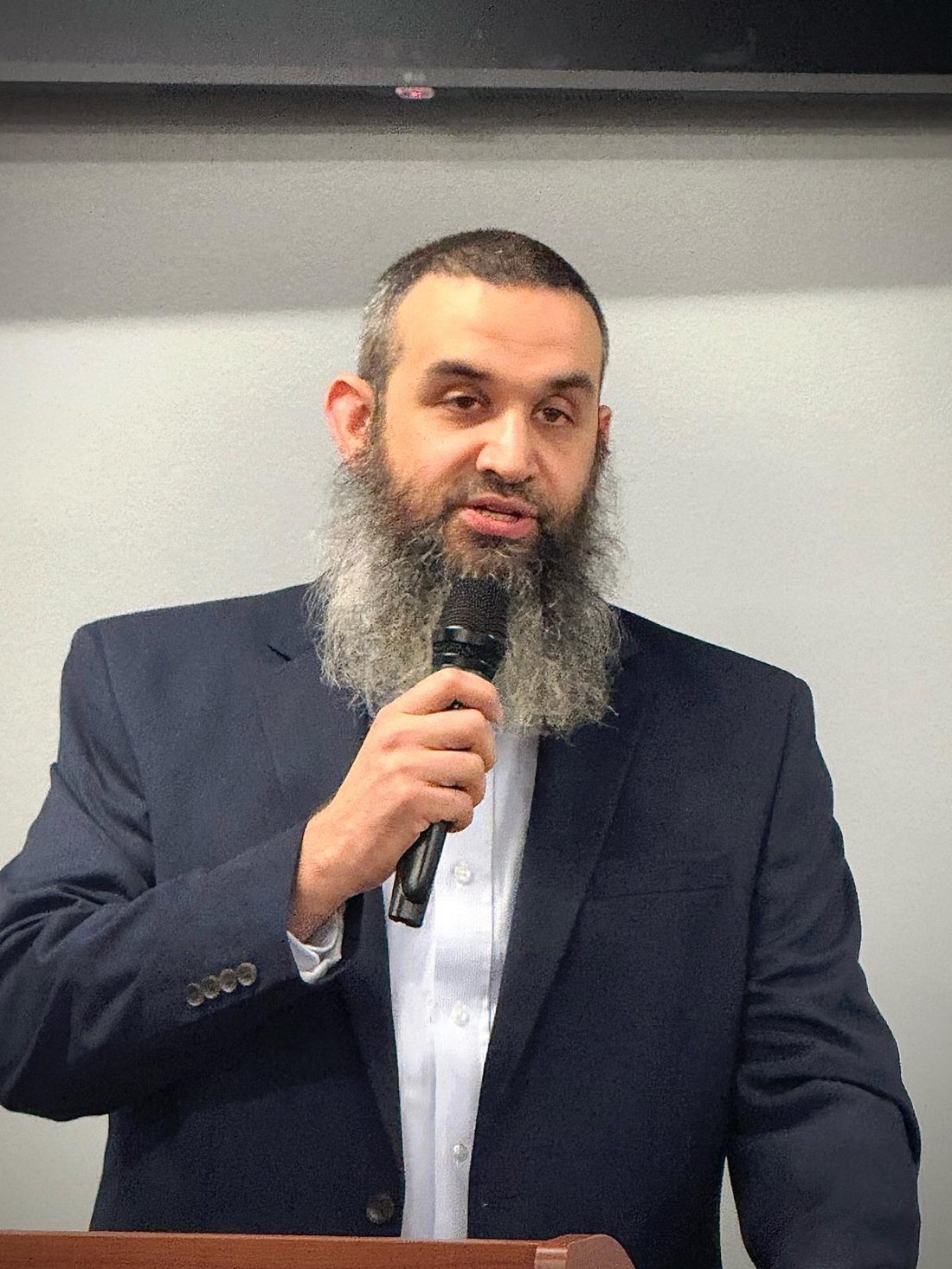
The gap isn’t bad intentions. It’s missing information.
Generic cultural-competency training keeps falling short with Muslim students — because it leaves out the actual beliefs and daily realities that shape their school experience. Here’s what that gap looks like from inside your building.
Missteps become complaints
One misread of a student, a holiday, or a family expectation turns into a phone call to the principal — and a relationship that is slow and painful to rebuild.
Students quietly disengage
When kids feel unseen — or worse, subtly suspected — they stop participating. Achievement gaps widen and no one can name exactly why.
Staff freeze up
Uncertainty about faith and church-and-state lines cuts both ways. Caution gets mistaken for coldness, and teachers avoid the very students who need connection most.
Research on the experience of Muslim students in America and other Western countries overwhelmingly suggests the same thing: their cultural background has not been drawn upon to build better outcomes and relationships. It is more likely to be stigmatized than utilized. That is a solvable problem — and it is exactly what EMSIPS was built to solve.
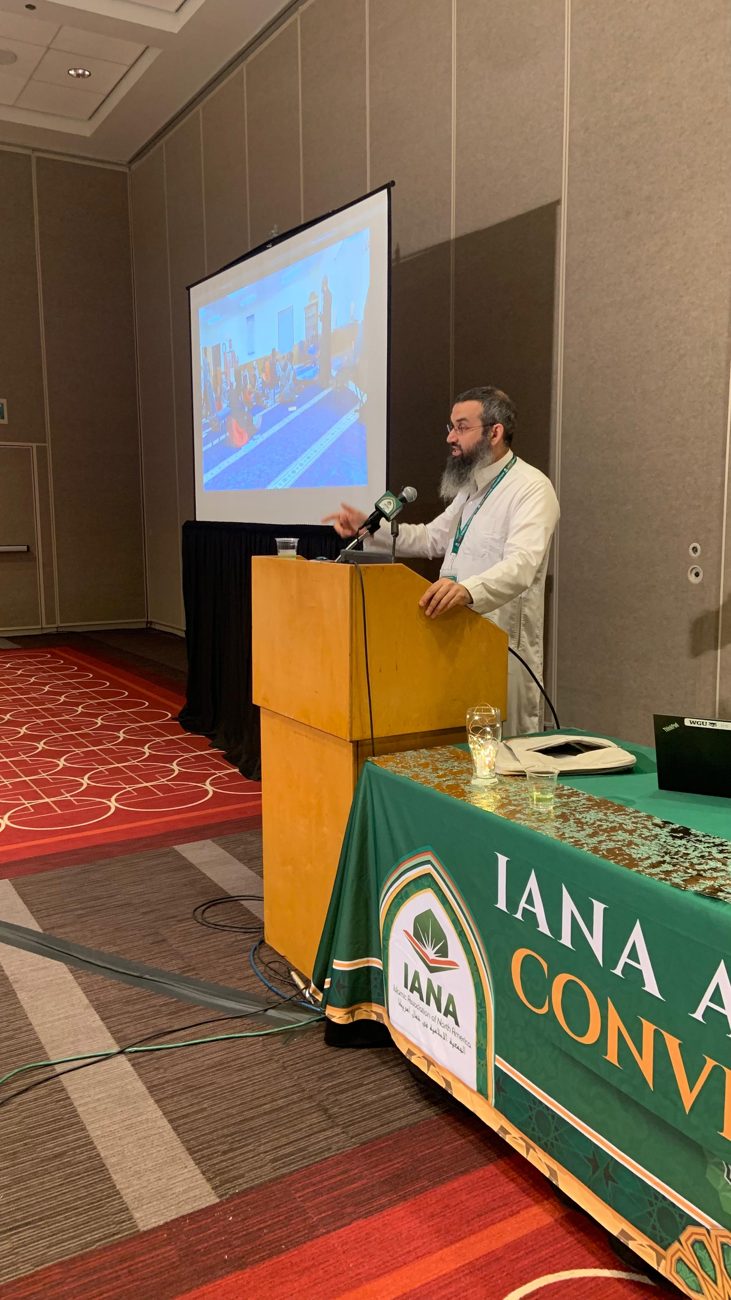
A bridge almost no one else can stand on.
Michael Abraham is a Muslim-American educator who has lived on both sides of the divide this training closes. He taught in the elite private schools of Saudi Arabia and in the public classrooms of Minneapolis. He has sat in the mosque and in the staff-development room. He holds a Master’s in Education with a specialization in behavior management — and he has spent years doing the primary research almost no one else has done: how learning actually happens in North American mosques, and how that shapes the way Muslim children experience your classroom.
“It’s insight not readily available elsewhere.” — the line principals keep using about Michael’s work.
That combination — real classroom authority, the science of how children learn, and insider cultural fluency with Muslim and East African communities — is what makes EMSIPS different from any diversity workshop your staff has sat through. This isn’t sensitivity theater. It’s a working manual for reaching students you are already responsible for.
The full seminar: six parts, one working understanding.
Drawn directly from Michael’s book, Engaging Muslim Students in Public Schools. Delivered as a keynote, a half-day, or a full PD series — scaled to your staff.
Why this learning is non-negotiable
The research — and the evaluation rubrics your teachers are already judged on — that make cultural knowledge of students a professional expectation, not an extra. Background knowledge is directly tied to student confidence, independence, and self-initiation.
Muslims in America: background & identity
Who your Muslim students actually are — the deep history, the immigration and refugee patterns, and the range of demographics, class, and education behind the word “Muslim,” and what each means for educators.
Beliefs & teachings — and the connections to make
The core beliefs, practices, and perspectives shared across virtually all Muslim cultures — how they overlap and diverge from Western worldviews, and how they show up in your building every day.
Technicalities of practice & cultural collision
What is obligatory, what is forbidden, and where students feel most conflicted — with specific recommendations to accommodate religious practice while keeping an efficient, learning-focused environment. Detail available nowhere else, and essential for school leaders.
Mosque learning & strategies for ESL and struggling learners
What kind of learning happens in the mosque, how it frames students’ perceptions of school — and how that familiarity can be drawn on as a resource. Michael’s original research turned into classroom strategy.
Creating mirrors: texts that feature Muslims
Four years of research into K–12 texts that portray Muslims authentically — how to spot stereotyped portrayals, and how to give Muslim students literature that lets them bring their identity into the room, paired with standards-aligned lesson plans.
What your staff walks away able to do.
Not a feeling. A capability — the kind teachers use the next school day.
Read the room correctly. Recognize what a behavior, a hesitation, or a family request actually means — instead of guessing and getting it wrong.
Accommodate without derailing. Honor prayer, fasting, dress, and dietary practice in ways that reinforce learning goals rather than compete with them.
Build real relationships with families. Communicate in a way that earns trust with parents who have often felt suspected rather than welcomed.
Use culture as an academic asset. Turn students’ background knowledge into engagement, confidence, and stronger outcomes — especially for ESL and struggling learners.
Give students mirrors. Put authentic texts and lessons in front of Muslim students so they see themselves — and their peers see them accurately.
Stay on the right side of the law. Understand religious rights and church-and-state lines clearly enough to act with confidence instead of fear.
Trusted where it counts — and now sought beyond the classroom.
Michael has been a featured presenter at Ohio State, the University of Washington, and Hamline University, and has consulted on public-school turnaround work. His book has reached leaders around the world — including the hands of Bangladesh’s Minister of Education.
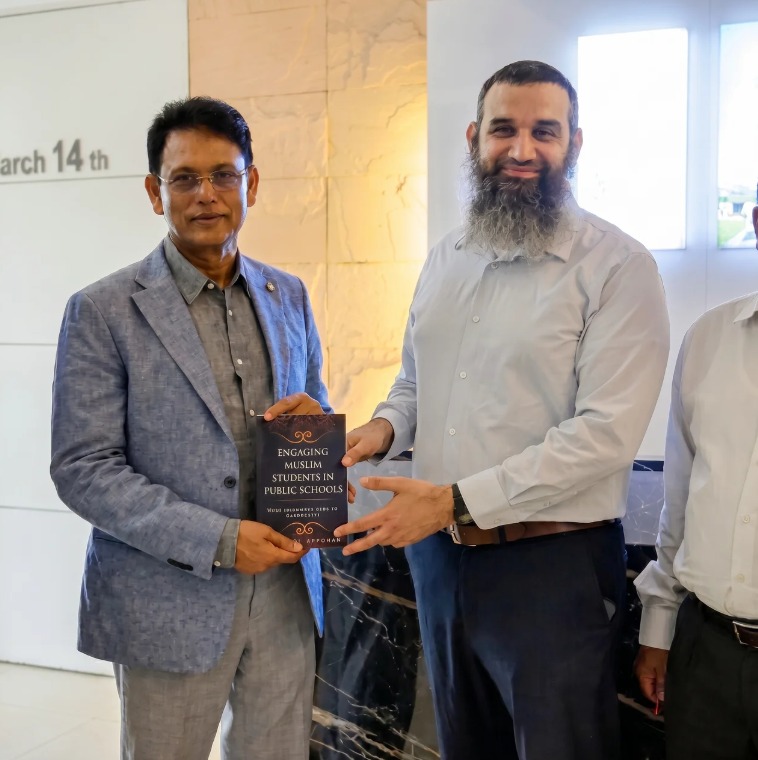
The same fluency travels. Institutions that serve Muslim communities keep asking for it.
Where it started: 7,000+ teachers, principals, and district leaders across the country.
The same cultural understanding that helps a teacher reach a student helps clinicians build trust with Muslim patients and families.
Agencies serving diverse populations increasingly seek the insider fluency Michael brings to reduce friction and build understanding.
Principals don’t hand out language like this lightly.
“My highest recommendation.”
Ray Garcia MoralesPrincipal, Chief Sealth HS · Seattle Public Schools
“Insight not readily available elsewhere.”
Gregory PigeonPrincipal, Amherst Central HS · NY
“Perspectives we simply could not have received anywhere else.”
Sara VernigPrincipal, Osseo Senior HS · MN
“He uniquely articulates complex cultural matters in a way that moves a whole staff forward.”
Ahmed NoorAssistant Director · Boston Public Schools
“This should be a requirement for every single teacher.”
Workshop participantOne of 7,000+ educators trained
“After twenty-five years in the classroom, I learned things I had never been taught.”
Veteran teacherEMSIPS seminar attendee
One conversation tells you exactly where to start.
Whether you need a single staff keynote or a full professional-development series, it begins the same way: a short call about your building, your students, and your goals.
Book a call about EMSIPS
On a brief, no-obligation call, Michael will help you scope the right format for your staff — from a high-impact session your teachers will still be talking about next year, to a phased series across the school year.
Half-day seminar (3 hours): $1,000 — rate increases to $1,500 in August
- Author-led, drawn directly from the EMSIPS book
- Practical strategies staff can use the next morning
- Scales from a single keynote to a full PD continuum
- Optional CEU pathway for participating educators
Prefer email? Write to info@abrahameducation.com and we’ll reply within two business days with a recommended starting point.
Your Muslim students are already in the building. The only question is whether your staff can reach them.
Give your teachers the one thing generic training never has: what’s actually going on, and what to do about it Monday morning.
Book a call about EMSIPS